rest in peace REST, The rise of GraphQL
English Talk
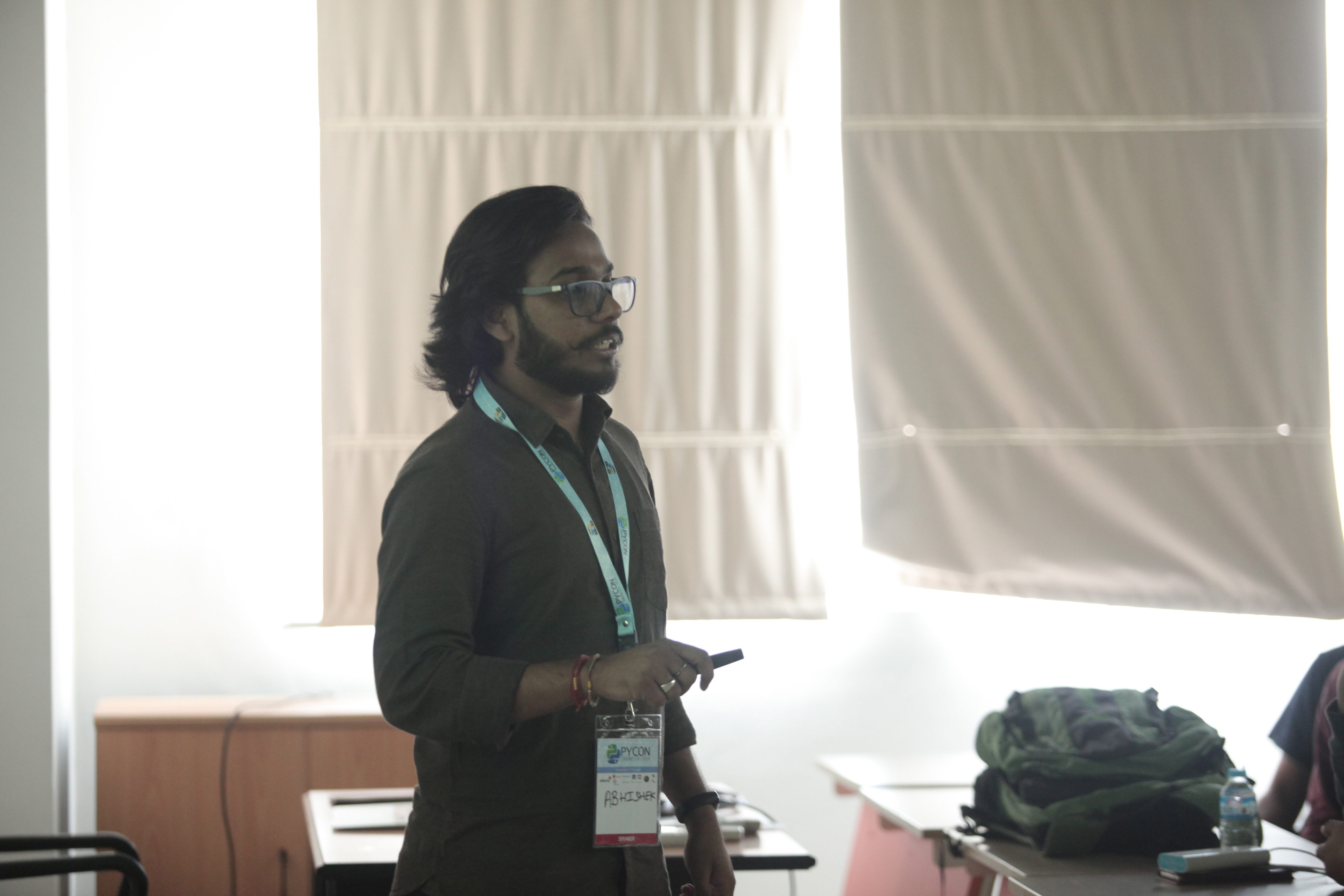
Abhishek Mishra
from Software Engineer at Essentia SoftServ
Pythonista. A community person who loves to be in dev community and organize conferences and meetups. I am also one of the organizer of PyCon India 2019.
"rest in peace REST. The rise of GraphQL. This talk will help cover basics of GraphQL and how to use GraphQL with Python."
I’m Abhishek 👨💻, **Community first person** . I organize community meetups and events. I am also Pythonista and currently working in computer vision (professionally). I love to code in python and always give preference to Python when it comes to solve any problem, let it be a web services, desktop application or automation tasks. I am intermediate user in cloud computing and exploring same with python. I've been to many community events and conferences, boot-camp for talks and session (Of course related to Python & Dev's 😎). I try to help Dev communities fullest to my capacity. Currently helping & volunteering PyCon india team for boosting 🚀 the conference. For more information you can have a look at my LinkedIn profile.
rest in peace REST, The rise of GraphQL
In the past couple of years, we’ve seen companies begin to embrace GraphQL as an alternative to REST API’s due to their expressive power and correctness guarantees.
Since it’s introduced by Facebook, GraphQL is in contention as an alternative to REST APIs. Github has also announced GraphQL support to one of their APIs.
Because GraphQL is not simply a evolutionary replacement for REST, this talk will help cover basics of GraphQL and how to use GraphQL with Python.
GraphQL - It's a strongly typed query language that describes how to request data. GraphQL declares everything as a graph. You request what you want, and then you will get what you expected. Nothing more, nothing less.
Through this talk, I'll like to discuss following points:
- Quick walkthrough on REST
- What's wrong with REST ?
- Solution to solve REST issues - GraphQL
- Why GraphQL ?
- About GraphQL
- REST VS GraphQL
- GraphQL building blocks
- How to use GraphQL in Python (list of libraries etc.)
- Example - Creating basic schema and querying using *graphene*
- Best practices & Conclusion.
Sponsor
Platinum Sponsor

Gold Sponsor


Tote Bag Sponsorship

Supported By


Organized By


Exclusive Media Partner

Venue Partner
